

How does the pressure change during the filtration process of ceramic foam filters?
Dec 25, 2025
Leave a message
Hey there! As a ceramic foam filter supplier, I've had my fair share of experiences and insights into the wonderful world of filtration. One question that keeps popping up is, “How does the pressure change during the filtration process of ceramic foam filters?” Let's dive right in and explore this topic in detail.
Understanding the Basics of Ceramic Foam Filters
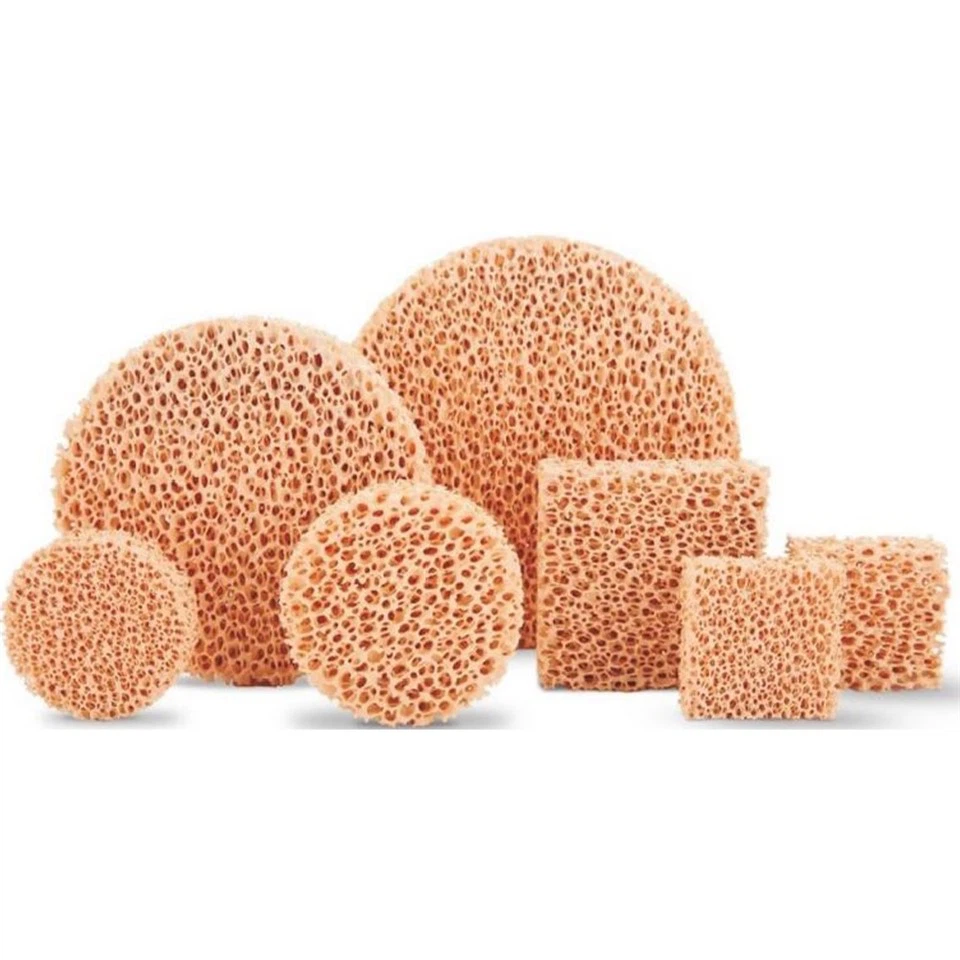
First off, ceramic foam filters are pretty cool. They're used in a bunch of industries, like foundries, to remove impurities from molten metals. We offer different types, such as Zirconia Ceramic Foam Filter and Silicon Carbide Ceramic Foam Filter. These filters have a unique porous structure that allows the molten metal to pass through while trapping unwanted particles.
Initial Pressure Conditions
When the filtration process starts, the pressure at the inlet of the filter is relatively high. This high - pressure is what drives the molten metal through the filter. The initial pressure is mainly determined by the external force applied to the molten metal. For example, in a foundry, it could be the pressure from the pouring system or the weight of the molten metal column above the filter.
At the beginning, the filter is clean, and the pores are open. This means there's relatively low resistance to the flow of the molten metal. So, the pressure drop across the filter is small. The pressure at the outlet of the filter is only slightly lower than the inlet pressure. You can think of it like water flowing through a clean pipe; there's not much to slow it down.
Pressure Changes as Filtration Progresses
As the filtration process goes on, things start to change. The impurities in the molten metal begin to get trapped in the pores of the ceramic foam filter. This gradually reduces the effective cross - sectional area of the pores available for the molten metal to flow through.
With a decrease in the available flow area, the resistance to the flow of the molten metal increases. According to the principles of fluid dynamics, when the resistance increases, the pressure drop across the filter also increases. So, the pressure at the inlet remains high, but the pressure at the outlet starts to drop more significantly.
This increase in pressure drop is not a linear process. At first, the change is relatively slow. As more and more impurities accumulate, though, the rate of pressure drop increase speeds up. It's a bit like a traffic jam; at first, a few cars being blocked doesn't cause much of a slowdown, but as more cars pile up, the traffic comes to a crawl.
Factors Affecting Pressure Changes
There are several factors that can affect how the pressure changes during the filtration process.
Filter Pore Size
The pore size of the ceramic foam filter plays a crucial role. A filter with smaller pores will have a higher initial resistance to the flow of molten metal, resulting in a larger initial pressure drop. As filtration progresses, smaller pores will also trap impurities more effectively, but they'll also clog up faster. This means the pressure drop will increase more rapidly compared to a filter with larger pores.
Impurity Concentration
The amount of impurities in the molten metal is another important factor. If the molten metal has a high concentration of impurities, more particles will be trapped in the filter pores. This leads to a quicker reduction in the available flow area and a faster increase in the pressure drop. On the other hand, if the molten metal is relatively clean, the pressure drop will increase at a slower rate.
Flow Rate
The flow rate of the molten metal through the filter also affects the pressure change. A higher flow rate means more molten metal is passing through the filter per unit time. This puts more stress on the filter pores and can cause the pressure drop to increase more rapidly. Lower flow rates, on the contrary, result in a slower increase in the pressure drop.

The Role of Pressure Monitoring
Monitoring the pressure during the filtration process is super important for us as suppliers and for our customers. By keeping an eye on the pressure, we can tell how well the filter is working. A sudden or abnormal increase in pressure drop could indicate that the filter is clogging up too quickly. This might mean that there's a problem with the quality of the molten metal or that the filter is the wrong type for the application.
On the other hand, if the pressure drop is too low, it could mean that the filter is not trapping enough impurities. This could lead to poor - quality castings. So, pressure monitoring helps us optimize the filtration process and ensure that our customers get the best results.
Implications for Our Customers
For our customers in the foundry and other industries, understanding how the pressure changes during the filtration process is key. It helps them select the right type of ceramic foam filter for their specific application. For example, if they're dealing with molten metal that has a high impurity concentration, they might need a filter with larger pores to avoid rapid clogging.
It also allows them to monitor the performance of the filter during the filtration process. If they notice an unexpected pressure change, they can take corrective action, like replacing the filter or adjusting the flow rate of the molten metal.
Conclusion
In a nutshell, the pressure change during the filtration process of ceramic foam filters is a complex but important phenomenon. It starts with a relatively small pressure drop when the filter is clean, and then the pressure drop increases as impurities accumulate in the pores. Factors like pore size, impurity concentration, and flow rate all play a role in how the pressure changes.
As a ceramic foam filter supplier, we're here to help our customers understand these processes and choose the best filters for their needs. If you're in the market for high - quality ceramic foam filters and want to learn more about how they can work for your specific application, don't hesitate to reach out. We're always happy to have a chat and discuss your requirements. Whether it's Zirconia Ceramic Foam Filter or Silicon Carbide Ceramic Foam Filter, we've got you covered. Let's start a conversation and see how we can improve your filtration process together!
References
- Smith, J. (2018). "Fluid Dynamics in Filtration Processes." Journal of Industrial Filtration.
- Johnson, A. (2019). "Ceramic Foam Filters: Properties and Applications." Foundry Technology Review.