

What is the impact of temperature fluctuations on a precision casting crucible?
Nov 10, 2026
Leave a message
Yo, folks! As a supplier of Precision Casting Crucible, I've seen firsthand how temperature fluctuations can really mess with these bad boys. Let's dive into what's going on here.
The Basics of Precision Casting Crucibles
First off, let's talk a bit about precision casting crucibles. These are the containers we use to hold and melt metals during the precision casting process. They're super important because they need to withstand high temperatures and chemical reactions without breaking down.
Now, precision casting is all about getting super accurate and detailed metal parts. You need a crucible that can handle the heat and keep the metal in a molten state until it's ready to be poured into the mold. And that's where temperature comes in.
How Temperature Fluctuations Happen
Temperature fluctuations can occur for a bunch of reasons. In a foundry, the heating equipment might not be perfectly calibrated. Sometimes, there are power outages or fluctuations in the energy supply, which can cause the temperature inside the crucible to go up and down. Also, the ambient temperature in the foundry can change throughout the day, especially if there's no proper climate control.
For example, if it's a really hot day, the outside temperature can affect the heating system and make it harder to maintain a stable temperature inside the crucible. On the other hand, if it's cold, the crucible might cool down faster than expected.
The Impact on the Crucible Material
One of the biggest impacts of temperature fluctuations is on the crucible material itself. Most precision casting crucibles are made from materials like graphite, ceramic, or a combination of both. These materials have specific thermal expansion coefficients, which means they expand and contract as the temperature changes.
When the temperature fluctuates rapidly, the crucible material can experience stress. If the expansion and contraction happen too quickly, it can lead to cracks in the crucible. These cracks are a big problem because they can cause the molten metal to leak out, which is not only dangerous but also a waste of material.
Let's say you have a graphite crucible. Graphite has a relatively high thermal conductivity, which means it can transfer heat quickly. But when the temperature changes suddenly, the outer layer of the graphite might expand or contract faster than the inner layer. This creates internal stress, and over time, it can lead to the formation of cracks.

Effects on the Molten Metal
Temperature fluctuations also have a big impact on the molten metal inside the crucible. The quality of the castings depends on the properties of the molten metal, and temperature plays a crucial role in that.
When the temperature is too high, the metal can become more fluid, which might seem like a good thing. But it can also cause problems like excessive oxidation. Oxidation can lead to the formation of impurities in the metal, which can weaken the final casting.
On the other hand, if the temperature drops too low, the metal might start to solidify prematurely. This can result in incomplete filling of the mold, which means the casting won't have the right shape or dimensions.
For example, if you're casting a complex part with thin walls, a sudden drop in temperature can cause the metal to solidify before it reaches all the corners of the mold. This can lead to defects like porosity or incomplete sections in the final casting.
Impact on the Casting Process
The casting process itself is also affected by temperature fluctuations. In precision casting, timing is everything. You need to pour the molten metal into the mold at the right temperature and at the right time.
If the temperature is constantly changing, it becomes really hard to control the pouring process. You might end up pouring the metal too early or too late, which can lead to all sorts of problems.
For instance, if the temperature is too high when you pour the metal, it can splash out of the crucible and cause safety hazards. And if it's too low, the metal might not flow smoothly into the mold, resulting in a poor-quality casting.
How to Mitigate the Impact
So, what can we do to reduce the impact of temperature fluctuations on precision casting crucibles? Well, there are a few things.
First, we need to invest in high-quality heating equipment. This means using furnaces and heaters that can maintain a stable temperature. We also need to regularly calibrate these devices to make sure they're working properly.
Another important thing is to have good insulation around the crucible. Insulation can help to reduce the impact of external temperature changes and keep the temperature inside the crucible more stable.
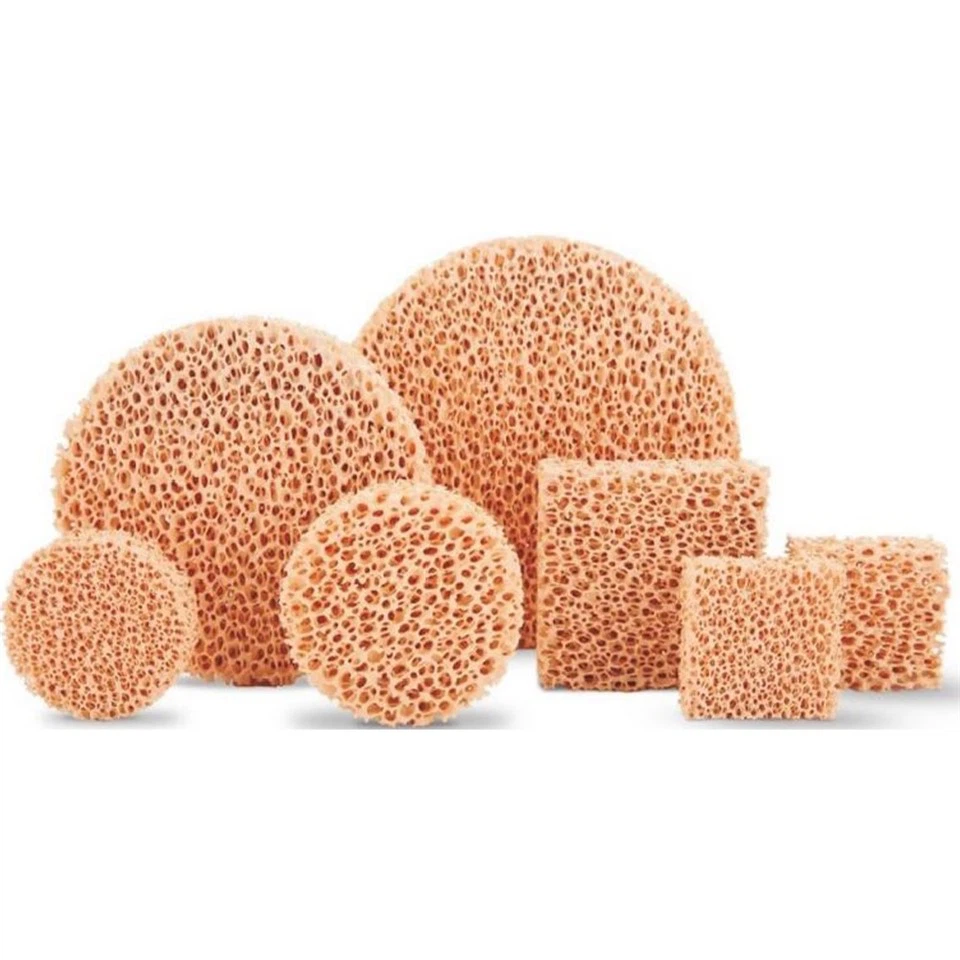
We can also use Zirconia Ceramic Foam Filter to improve the quality of the molten metal. These filters can remove impurities and help to maintain a more consistent temperature in the metal.
And of course, we need to have a good monitoring system in place. This can include temperature sensors inside the crucible and in the surrounding environment. By constantly monitoring the temperature, we can detect any fluctuations early and take corrective action.
Conclusion and Call to Action
In conclusion, temperature fluctuations can have a significant impact on precision casting crucibles and the overall casting process. As a supplier of Precision Casting Crucible, I know how important it is to understand these issues and take steps to mitigate them.
If you're in the market for precision casting crucibles or related products like Zirconia Ceramic Foam Filter and Pouring Ladle, I'd love to have a chat with you. We can discuss your specific needs and how we can help you achieve the best results in your precision casting process. So, don't hesitate to reach out and let's start a conversation!
References
- Smith, J. (2020). "The Effects of Temperature on Precision Casting." Journal of Foundry Technology, 15(2), 45-52.
- Johnson, A. (2019). "Thermal Stress in Crucible Materials." Materials Science Review, 22(3), 78-85.