

How to design an efficient membrane module for alumina ceramic membrane?
Oct 29, 2025
Leave a message
Hey there! As a supplier of alumina ceramic membranes, I've seen firsthand the importance of designing an efficient membrane module. In this blog post, I'm gonna share some tips and tricks on how to design a top - notch alumina ceramic membrane module.
Understanding Alumina Ceramic Membranes
First things first, let's talk a bit about alumina ceramic membranes. These membranes are super popular in a bunch of industries like water treatment, food and beverage processing, and pharmaceutical manufacturing. Why? Well, they've got some awesome properties. Alumina is a hard and chemically stable material, which means the membranes can handle high temperatures, harsh chemicals, and high pressures. This makes them a reliable choice for tough applications.
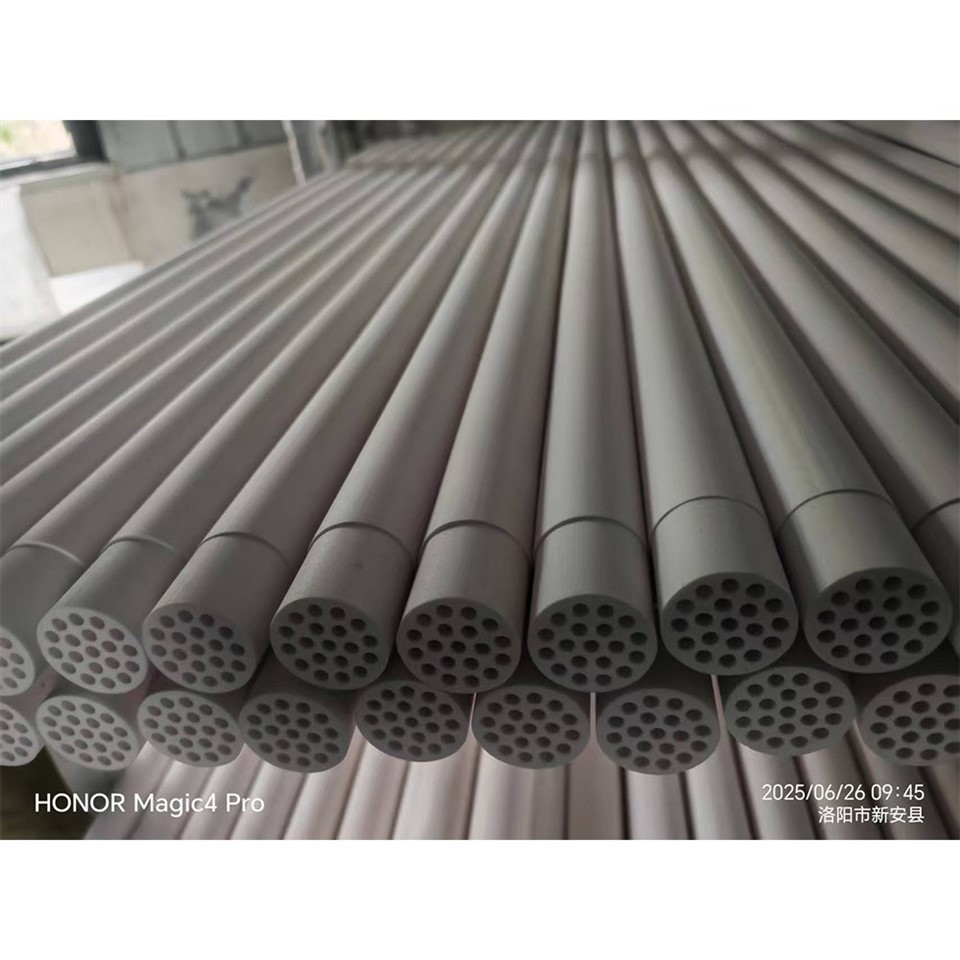
There are two main types of alumina ceramic membranes that we offer: Alumina Ceramic Flat Membrane and Alumina Ceramic Tubular Membrane. Flat membranes are great for applications where you need a large surface area in a compact space. They're often used in small - scale filtration systems. Tubular membranes, on the other hand, are better for high - flow applications. They can handle a lot of fluid passing through them without getting clogged as easily.
Key Factors in Designing an Efficient Membrane Module
1. Membrane Configuration
The configuration of the membrane in the module is crucial. You've got to think about how the fluid is going to flow through the membrane. For flat membranes, you can stack them in a parallel or series arrangement. A parallel arrangement allows for a higher flow rate because the fluid can pass through multiple membranes at the same time. But if you need a higher level of filtration, a series arrangement might be better. In a series setup, the fluid passes through one membrane after another, which can remove more contaminants.
For tubular membranes, the way they're bundled together matters. You can have a single - tube module or a multi - tube module. A multi - tube module can increase the overall surface area available for filtration, but you've got to make sure the flow is evenly distributed among the tubes. Otherwise, some tubes might get overloaded while others are underutilized.
2. Flow Channel Design
The design of the flow channels in the membrane module is another important factor. The channels should be designed to minimize resistance to fluid flow. If the channels are too narrow, the fluid will have a hard time passing through, which can lead to a decrease in the filtration rate. On the other hand, if the channels are too wide, the fluid might not come into contact with the membrane surface effectively, reducing the filtration efficiency.
One way to optimize the flow channel design is to use a uniform cross - section throughout the module. This helps to ensure a consistent flow rate and pressure distribution. You can also add some features like baffles or fins to the channels. These can help to mix the fluid and increase the contact between the fluid and the membrane surface.
3. Sealing and Support Structures
Proper sealing is essential to prevent leakage in the membrane module. You need to use high - quality sealing materials that can withstand the operating conditions of the module, such as high temperatures and pressures. The sealing should be tight enough to prevent any bypass of the fluid around the membrane.
Support structures are also important. They help to keep the membranes in place and prevent them from getting damaged during operation. For flat membranes, you can use a frame or a support plate. For tubular membranes, a tube sheet can be used to hold the tubes in position. The support structures should be strong enough to withstand the forces exerted by the fluid flow and the pressure inside the module.
4. Material Selection for the Module Housing
The housing of the membrane module should be made of a material that is compatible with the alumina ceramic membranes and the fluid being filtered. It should be able to resist corrosion and mechanical stress. Common materials for module housings include stainless steel, plastic, and fiberglass. Stainless steel is a popular choice because it's strong, durable, and resistant to corrosion. Plastic can be a more cost - effective option for some applications, but it might not be suitable for high - temperature or high - pressure environments.
Design Process
Step 1: Define the Requirements
The first step in designing an efficient membrane module is to define the requirements. You need to know what kind of fluid you're going to filter, the flow rate, the pressure, and the level of filtration required. For example, if you're filtering water for drinking, you'll need a different level of filtration compared to filtering wastewater from an industrial process.
Step 2: Select the Membrane Type
Based on the requirements, you can select the appropriate type of alumina ceramic membrane. If you need a high - flow rate and a large surface area, a tubular membrane might be the best choice. If you're working in a compact space and need a high level of filtration, a flat membrane could be more suitable.
Step 3: Design the Module Configuration
Once you've selected the membrane type, you can start designing the module configuration. Decide on the number of membranes, the arrangement (parallel or series), and the flow channel design. You can use computer - aided design (CAD) software to model the module and simulate the fluid flow. This can help you to optimize the design before you start manufacturing.
Step 4: Choose the Sealing and Support Structures
Select the appropriate sealing materials and support structures based on the module design and the operating conditions. Make sure the sealing and support structures are compatible with the membrane and the housing material.
Step 5: Select the Housing Material
Choose the housing material that is best suited for the application. Consider factors like corrosion resistance, mechanical strength, and cost.
Step 6: Prototype and Testing
After you've completed the design, it's time to build a prototype. Test the prototype under the actual operating conditions to see how it performs. You can measure the filtration rate, the pressure drop, and the level of filtration. Based on the test results, you can make any necessary adjustments to the design.
Benefits of an Efficient Membrane Module
Designing an efficient membrane module has several benefits. Firstly, it can increase the filtration rate, which means you can process more fluid in less time. This can lead to higher productivity and lower operating costs. Secondly, an efficient module can improve the quality of the filtrate. By ensuring that the fluid comes into contact with the membrane surface effectively, you can remove more contaminants and produce a cleaner product.

Finally, an efficient membrane module can have a longer lifespan. By minimizing the stress on the membranes and ensuring proper sealing and support, you can reduce the risk of membrane damage and extend the time between replacements.
Contact Us for Your Alumina Ceramic Membrane Needs
If you're in the market for alumina ceramic membranes or need help designing an efficient membrane module, we're here to assist you. Our team of experts has years of experience in the field and can provide you with customized solutions to meet your specific requirements. Whether you need a small - scale filtration system or a large - scale industrial application, we've got the products and the knowledge to help you succeed.
References
- Cheryan, M. (1998). Ultrafiltration and Microfiltration Handbook. Technomic Publishing.
- Mulder, M. (1996). Basic Principles of Membrane Technology. Kluwer Academic Publishers.
- Strathmann, H. (2010). Synthetic Membranes: Science, Engineering and Applications. Springer.