

Can Alumina Ceramic Flat Membrane be used in harsh environments?
Jan 08, 2026
Leave a message
Can Alumina Ceramic Flat Membrane be used in harsh environments?
As a supplier of Alumina Ceramic Flat Membranes, I've often been asked about the suitability of our products in harsh environments. In this blog, I'll delve into the properties of Alumina Ceramic Flat Membranes and explore their potential applications in challenging conditions.
Properties of Alumina Ceramic Flat Membranes
Alumina ceramic flat membranes are made from high - purity alumina materials. Alumina, or aluminum oxide (Al₂O₃), is known for its excellent physical and chemical properties. First of all, it has a high melting point, typically around 2054 °C. This high melting point gives the membrane the ability to withstand extremely high temperatures without significant deformation or degradation. For example, in industrial processes such as metal smelting or high - temperature gas filtration, where temperatures can soar to several hundred degrees Celsius, the Alumina Ceramic Flat Membrane can maintain its structural integrity.
In addition to high - temperature resistance, alumina ceramic flat membranes also possess remarkable chemical stability. They are highly resistant to corrosion from a wide range of chemicals, including acids, alkalis, and organic solvents. This chemical inertness makes them ideal for use in chemical processing plants, where they can be exposed to corrosive substances during various separation and purification processes. For instance, in the production of pharmaceuticals, where strict purity requirements are necessary, the Alumina Ceramic Flat Membrane can be used to separate and purify chemical compounds without being affected by the harsh chemical environment.
Another important property is its mechanical strength. Alumina ceramic flat membranes have high hardness and good wear resistance. This means they can withstand mechanical stress, such as pressure differentials and abrasion, without breaking or cracking easily. In applications like water treatment, where the membrane may be subject to high - pressure filtration, the strong mechanical properties of the Alumina Ceramic Flat Membrane ensure long - term operation without frequent replacements.
Applications in Harsh Environments
High - Temperature Environments
In high - temperature industrial processes, Alumina Ceramic Flat Membranes play a crucial role. For example, in the power generation industry, especially in advanced coal - fired power plants with integrated gasification combined cycle (IGCC) systems, these membranes can be used for hot gas filtration. The hot syngas produced in the gasification process contains various particulate matter, and the Alumina Ceramic Flat Membrane can effectively separate these particles at high temperatures, improving the efficiency and environmental performance of the power generation process.
In the metallurgical industry, during the production of metals such as steel and aluminum, high - temperature gas purification is required. The Alumina Ceramic Flat Membrane can be used to filter out dust and impurities from the high - temperature exhaust gases, reducing environmental pollution and protecting downstream equipment from damage.
Corrosive Environments
In the chemical industry, Alumina Ceramic Flat Membranes are widely used in corrosive environments. For example, in the production of fertilizers, where strong acids and alkalis are involved, these membranes can be used for the separation and purification of chemical solutions. They can resist the corrosion of sulfuric acid, hydrochloric acid, and sodium hydroxide, ensuring the stability and efficiency of the production process.
In the electroplating industry, waste water contains a large amount of heavy metal ions and organic solvents. The Alumina Ceramic Flat Membrane can be used to treat this waste water, separating the valuable metal ions and purifying the water. The membrane's resistance to corrosion from the electroplating solutions and chemicals makes it a reliable choice for this application.
High - Pressure and Abrasive Environments
In the oil and gas industry, Alumina Ceramic Flat Membranes are used in high - pressure filtration processes. For example, in the separation of oil - water mixtures, the membrane can withstand high - pressure differentials to achieve efficient separation. At the same time, the wear - resistant property of the membrane allows it to resist the abrasion caused by the flow of oil and water containing solid particles.
In the mining industry, during the process of ore beneficiation, the slurry contains a large amount of abrasive particles. The Alumina Ceramic Flat Membrane can be used to separate the solid and liquid phases in the slurry under high - pressure conditions. Its high mechanical strength and wear resistance ensure that it can operate effectively in this harsh abrasive environment.
Comparison with Other Membrane Types
When compared with other membrane types, such as polymeric membranes, Alumina Ceramic Flat Membranes have significant advantages in harsh environments. Polymeric membranes are generally more susceptible to high temperatures, corrosion, and mechanical stress. For example, at high temperatures, polymeric membranes may soften or even melt, losing their separation performance. In corrosive environments, they can be easily attacked by chemicals, leading to degradation and failure.
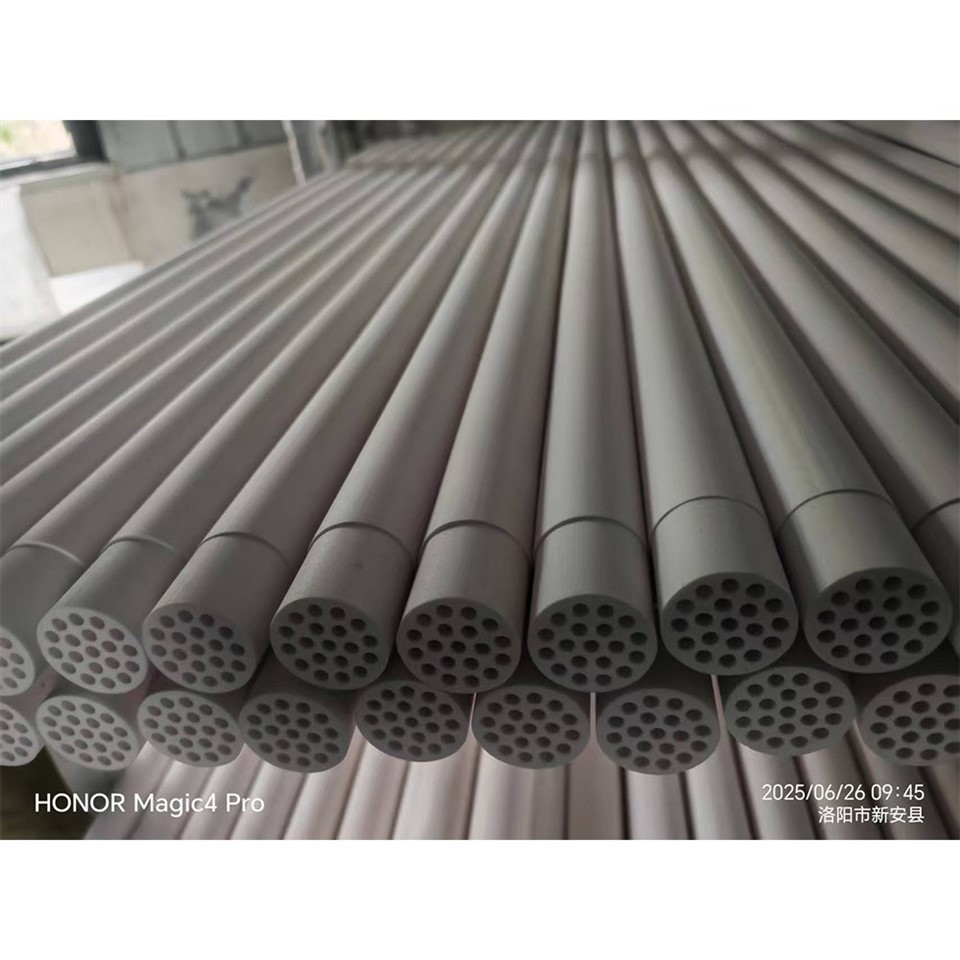
On the other hand, Alumina Ceramic Tubular Membranes also have their own characteristics. While both Alumina Ceramic Flat Membranes and Alumina Ceramic Tubular Membranes are made of alumina ceramic materials, the flat membrane design offers a larger filtration area per unit volume in some cases, which can improve the filtration efficiency. However, the tubular membrane may be more suitable for some applications where a more uniform flow distribution is required.
Challenges and Solutions
Although Alumina Ceramic Flat Membranes have many advantages in harsh environments, there are also some challenges. One of the main challenges is the high cost of production. The manufacturing process of alumina ceramic flat membranes involves high - temperature sintering and precision machining, which requires advanced equipment and technology, resulting in relatively high production costs. To address this issue, our company is constantly exploring new manufacturing processes and raw material sources to reduce costs while maintaining product quality.
Another challenge is the potential for membrane fouling. In some harsh environments, such as those with high concentrations of particulate matter or organic substances, the membrane surface may be fouled, reducing its filtration efficiency. To solve this problem, we have developed various anti - fouling technologies, such as surface modification and back - flushing systems. These technologies can effectively prevent and remove fouling, ensuring the long - term stable operation of the Alumina Ceramic Flat Membrane.

Conclusion
In conclusion, Alumina Ceramic Flat Membranes have excellent properties that make them suitable for use in harsh environments, including high - temperature, corrosive, and high - pressure abrasive conditions. Their high - temperature resistance, chemical stability, and mechanical strength enable them to play important roles in various industries such as power generation, chemical processing, and water treatment.
As a supplier of Alumina Ceramic Flat Membranes, we are committed to providing high - quality products and solutions to meet the needs of our customers in different harsh environments. If you are interested in our Alumina Ceramic Flat Membranes and want to discuss potential applications and procurement, please feel free to contact us. We look forward to working with you to solve your separation and purification challenges in harsh environments.
References
- "Ceramic Membranes: Structure, Transport and Applications" by A. Basu and S. Bandyopadhyay.
- "High - Temperature Membrane Reactors: Fundamentals, Modelling and Applications" by J. D. Way and H. Lin.
- "Membrane Technology and Applications" by R. W. Baker.